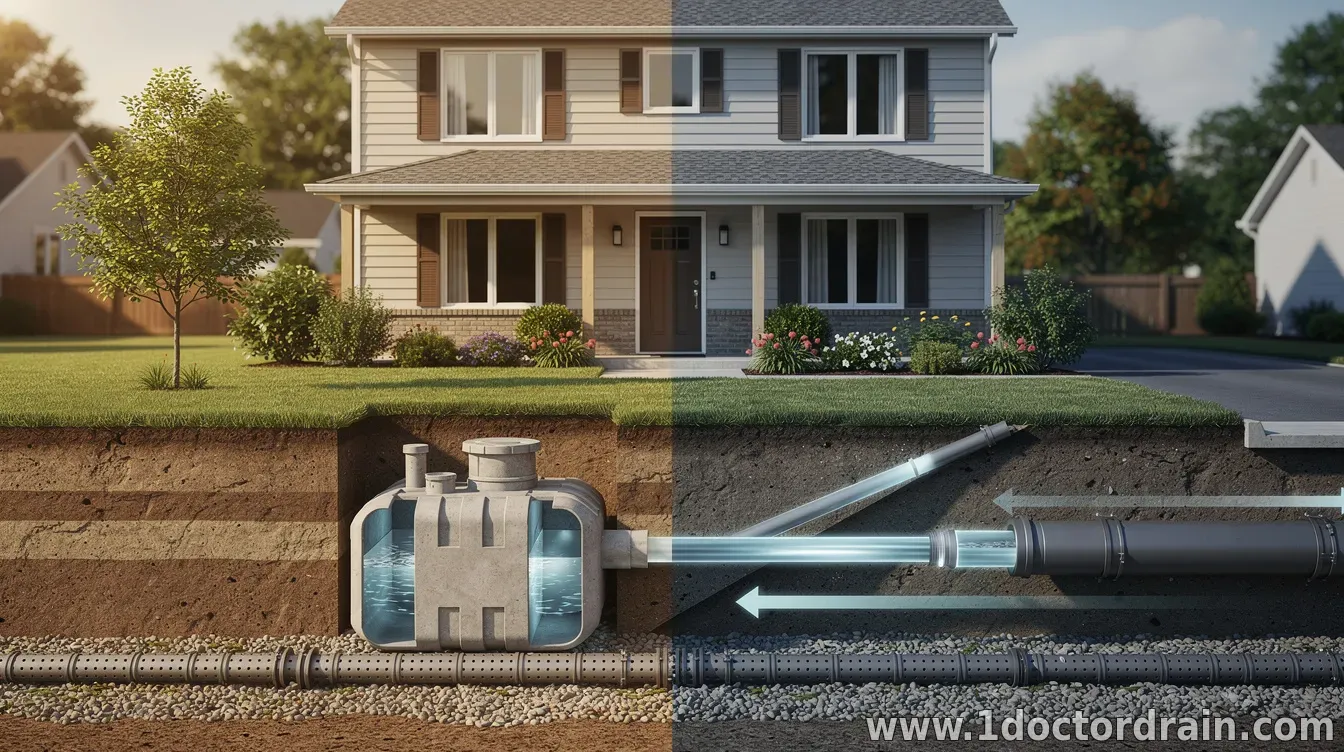
Fall Leaves and Storm Drains: Preventing Yard Flooding

  Fall Leaves and Storm Drains: Preventing Yard Flooding Fall brings two things that can quickly spell trouble for homes with storm-drain systems: leaf drop and frequent rain. When leaves, twigs, and yard debris collect in or near storm drains, they can slow water flow, raise local water levels, and push runoff toward driveways, basements, and low-lying yards.   Preventing that buildup is usually easier—and cheaper—than responding after water enters the home or saturates soil. With a few routine steps timed to autumn weather, homeowners can keep drainage paths clear and reduce the odds of flooding during downpours.   Why yard flooding happens in autumn   Storm drains are designed to move rainwater away from homes, but they rely on unobstructed flow. Leaves can form mats that trap additional debris, while wet conditions make piles heavier and harder to clear. Even partial blockage can redirect runoff to curb cuts, garden beds, or foundations.   ... Read more »

Septic vs. Sewer: What Suburban Homeowners Should Know Septic vs. Sewer: What Suburban Homeowners Should Know

 Septic vs. Sewer: What Suburban Homeowners Should Know

Septic vs. Sewer: What Suburban Homeowners Should Know


Choosing between a septic system and a public sewer line often comes down to the home’s location and how wastewater services are provided in the area. While both systems move household wastewater away from living spaces, they operate differently—and the maintenance responsibilities can fall squarely on the homeowner with septic.


How septic systems work


A septic system typically treats wastewater on-site. After it leaves the home, it flows into a septic tank where solids settle and scum forms. From there, the relatively clarified liquid moves to a drainfield (also called a leach field), where soil helps filter and disperse the effluent. Because the system depends on the health of both the tank and the drainfield, ongoing care is essential.


How sewer systems work


Municipal sewer systems collect wastewater from homes through underground pipes and transport it to a centralized ... Read more »

Comments

Popular posts from this blog

When Your Drains Demand Attention, Doctor Drain is Her

  When Your Drains Demand Attention, Doctor Drain is Here   Drains often fade into the background—until they don’t. A slow-draining sink, a backed-up shower, or that unwelcome sewer odor can quickly disrupt your daily routine. These issues may seem minor at first, but if left unchecked, they can escalate into major plumbing emergencies. That’s where Doctor Drain comes in. Our state-of-the-art technology and expertise ensure that your drain issues are diagnosed and resolved with precision and efficiency.   Cutting-Edge Inspections with 100% Accuracy   At Doctor Drain, we pride ourselves on utilizing the latest innovations in drain and sewer system diagnostics. Our inspections start with advanced Snake camera technology, allowing us to capture crystal-clear visuals of your drain system. With the addition of modern locating tools, we can pinpoint the exact location and nature of any problem, eliminating the need for guesswork or unnecessary digging.   Whether ...

What Happens When Your Pipes Get Frozen ?

  The Domino Effect of Frozen Pipes What Happens When Your Pipes Get Frozen ?   Winter in Lincolnshire, IL, can be breathtakingly beautiful, with snow-draped trees and frosty mornings. But for homeowners, the freezing temperatures often come with a hidden hazard—frozen pipes. At Doctor Drain, we’ve seen firsthand how a simple freeze can spiral into a costly plumbing emergency. Let’s walk you through what happens when pipes freeze, why it’s a problem, and how Doctor Drain can save the day.   A Chilling Situation in Lincolnshire   It was a frigid January morning when a Lincolnshire homeowner, Mrs. Taylor, woke up to a nightmare. Her kitchen faucet was dry, and an unusual bulge in the basement wall hinted at trouble. Alarmed, she called Doctor Drain, knowing we’re the experts trusted by her neighbors for everything from frozen pipes to clogged drains.   When our technician arrived, he used advanced plumbing tools, including thermal imaging and camera video inspecti...

Why Is My Kitchen Sink Always Clogged? | Doctor Drain Explains

  Why Is My Kitchen Sink Always Clogged? | Doctor Drain Explains   If you’re tired of constantly battling a clogged kitchen sink, you’re not alone. At Doctor Drain, we receive countless calls from homeowners asking, “Why does my kitchen sink always clog?” This common problem can stem from a variety of issues, but the good news is that with the right help, you can stop the cycle of constant clogs.   Common Reasons Your Kitchen Sink is Always Clogged 1. Grease Build-Up in Your Pipes One of the most common causes of a clogged kitchen sink is grease. Even if you run hot water while washing dishes, grease can solidify inside your pipes, leading to stubborn blockages. Searching for “how to unclog a kitchen sink” or “kitchen sink plumber near me” often brings homeowners to Doctor Drain for professional help. 2. Food Scraps Down the Drain Food particles are another frequent culprit. Whether it’s pasta, rice, or coffee grounds, these items don’t break down easily and can clog your...